

1. IFAB Issues Clarification on Controversial Decision
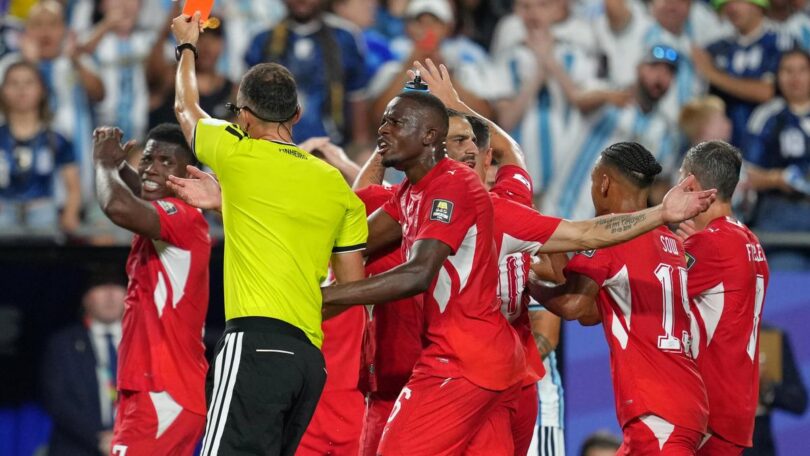
Football’s law-making body, International Football Association Board, has clarified its guidance to referees, confirming that Breel Embolo should not have been sent off during Switzerland’s FIFA World Cup quarter-final against **Argentina national football team>. The statement comes after widespread debate over the controversial refereeing decision that influenced the outcome of the match.
2. Red Card Changed the Course of the Match
Embolo received a second yellow card in the 72nd minute after a VAR review determined that he had simulated being fouled. The dismissal came shortly after Switzerland had equalized to make the score 1-1, dramatically shifting the momentum in Argentina’s favor during the crucial knockout encounter.
3. Argentina Went on to Secure Victory
With Switzerland reduced to ten players, Argentina capitalized on the numerical advantage and eventually claimed a 3-1 victory after extra time. The result sent Argentina into the next stage of the tournament, but the controversial sending-off remained one of the most discussed moments of the competition.
4. Complaints Over Officiating Intensified
The decision sparked criticism from football fans, analysts, and even representatives from previous opponents, including Egypt. Some argued that key refereeing decisions throughout the tournament appeared to favor Argentina and captain Lionel Messi, adding to the controversy surrounding the quarter-final.
5. IFAB Explains the VAR Protocol
In its official clarification, IFAB stated that the Video Assistant Referee protocol for “mistaken identity” cases did not apply to the incident involving Embolo during the World Cup. While the organization acknowledged that such situations could be reviewed under future rule changes, it emphasized that the current regulations did not permit VAR intervention in this manner during the tournament.
6. What Happened During the Incident
The incident occurred when Embolo went to ground following a challenge from Argentina midfielder Leandro Paredes. The referee initially showed Paredes a yellow card, but after consulting VAR, the decision was reversed. Embolo was instead booked for simulation, resulting in his second yellow card and subsequent dismissal.
7. Focus Turns to Future Rule Changes
IFAB’s clarification has renewed discussions about the role of VAR and the need for clearer protocols in major tournaments. Football authorities are expected to continue reviewing the laws to minimize controversial decisions and ensure greater consistency in future international competitions.






Leave a Comment